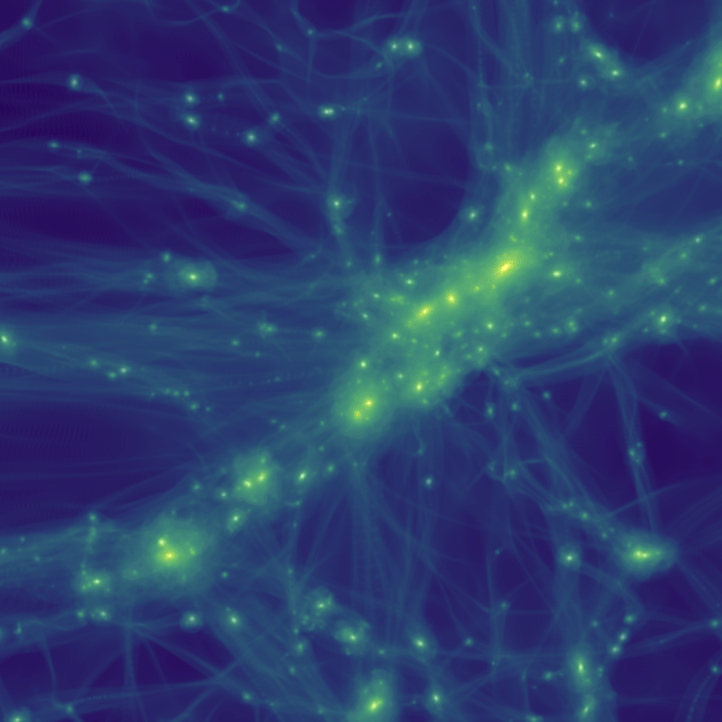
Computational astrophysics
Research
I study how galaxies form and evolve using large cosmological simulations.
-
2025 – Present
PhD research · George Mason University
Radiative Transfer in Simulated Dwarf Galaxies
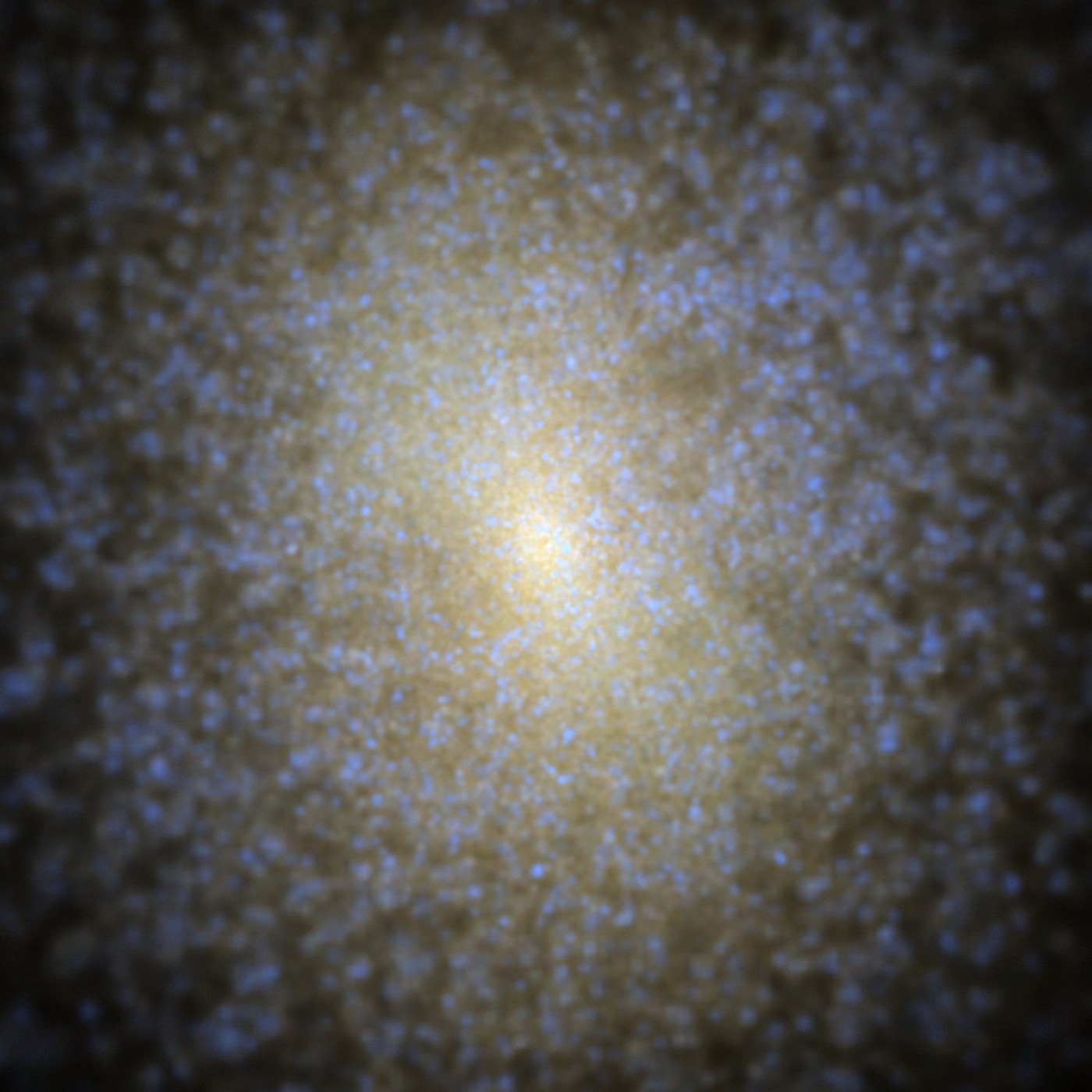
I run cosmological zoom-in simulations of dwarf galaxies that follow how radiation from young stars shapes the gas around them. Current work uses the Gasoline code with radiative transfer and superbubble feedback; the next generation of runs will use ChaNGa with the TREVR2 radiative transfer method.
-
2023 – 2025
Undergraduate Research · University of North Carolina at Chapel Hill
Machine Learning as a Predictor of Dark Matter Halo Formation
Tiny overdensities seeded during inflation grew into the first dark matter halos, the building blocks of the earliest galaxies. Models that predict halo properties from the initial density field usually assume every density peak collapses into a halo, which overestimates the halo population. I built and trained a fully connected neural network to predict which peaks actually form halos, across simulations with five very different sets of cosmological initial conditions. It identified halo formation with roughly 76–78% accuracy. Better predictions of which halos form could tighten constraints on the dark matter annihilation rate.